
Food Chaining Ideas for Picky Eaters: How to Help Your Child Try New Foods (Without the Mealtime Battles)
If your child has ever pushed away a new food without even tasting it, you know how stressful mealtimes can be. Maybe they only eat a few “safe” foods, or they blatantly refuse anything that looks, smells, or taste different. You’re not failing as a parent… your child just needs time, patience, and the right strategy.
One strategy that I often recommend parents try is called food chaining. Food chaining is a gentle, evidence-based way to help kids more from familiar foods to new, nutrient dense food without the pressure or tears. It can help their nervous system feel safe because instead of trying an entirely new food, we can decrease the change/stimuli by changing one thing at a time. It’s similar to the game “telephone”! We start with a preferred food and change the properties one at a time until the end result is something totally new.
Together, we’ll go over some food chaining examples for picky eaters - whether your child is a picky eater or is diagnosed with Avoidant Restrictive Food Intake Disorder (ARFID) or Pediatric Feeding Disorder (PFD).

What Is Food Chaining?
Food chaining is a step-by-step approach that helps kids expand their diet by building on what they already like. To start , we take your child’s favorite foods and make small, intentional changes — like adjusting the color, texture, or flavor — to help them slowly accept new, more nutrient-dense options.
It’s not about forcing or bribing. It’s about creating a bridge between familiar foods and new ones in a way that feels safe and positive. Progress doesn’t happen overnight but rather is built through one positive experience at a time.
Why Food Chaining Works
Often times, kids need repeated, low-pressure exposure to food before they’re ready to eat it. Research shows it can take at least 6–15 times for kids to try something new. Food chaining respects this process, helping your child develop comfort and curiosity rather than fear or resistance around food.
The process may take weeks or even months, but that’s OK! Every small step forward counts.
How to Start Food Chaining (Step-by-Step)
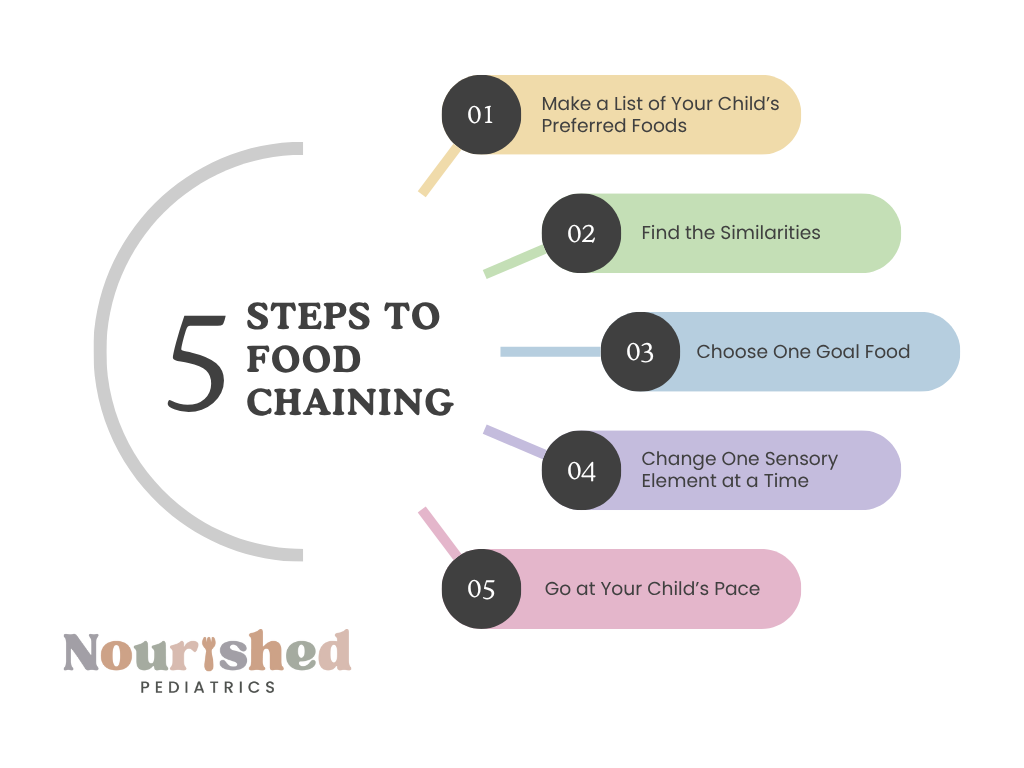
Step 1: Make a List of Your Child’s Preferred Foods
Write down every food your child currently eats — even if it’s a short list (5 foods is still 5 foods!). This is our starting point.
Step 2: Find the Similarities
What do their preferred foods have in common?
Do they gravitate toward white or tan foods? — Color
Are their foods crunchy, soft, creamy? — Texture
Do they tend to like sweet, salty, or savory? — Flavor
These clues will help you spot opportunities to make small, successful changes.
Step 3: Choose a Goal Food
Pick a single “goal food” you want your child to eventually eat — ideally something that adds nutrients they’re missing. For example if your child only eats dry, crunchy foods like Goldfish or toast, their diet may be low in fiber and protein.
From there, we can build our “chain” that links their preferred foods to the goal food. For example, we take Goldfish → offer crackers → whole-grain crackers → crackers with peanut butter → whole-grain toast with peanut butter → PB&J on whole-grain bread
If you’re struggling pinpointing what nutrient dense foods you should focus on, try working with a Registered Dietitian.
Step 4: Change One Sensory Element at a Time
Kids are sensitive to how foods look, feel, and taste. If we change too much at a time, they are more likely to resist. So, we focus on changing one sensory feature at a time:
Shape: Change the brand or shape of chicken nuggets.
Color: Go from broccoli to cauliflower.
Flavor: Shift from apple to peach.
Texture: Try strawberry gummies → jam → sliced strawberries.
💡 Tip: Use dips and sauces! If your child loves carrots with ranch, try celery with ranch next.
Step 5: Go at Your Child’s Pace
If they resist a new food, keep it positive and pressure-free. Instead try some different methods to get them accustomed to the new food:
Place the new food on a separate plate near familiar foods.
Let them explore — touching, smelling, licking, or even spitting it out are all steps toward comfort. IMPORTANT don’t get frustrated or mad if they spit the food out and refuse to eat it.
Offer a pea-sized amount.
Keep a favorite cup or utensil nearby for familiarity.
Remember: every exposure helps build acceptance, even if they don’t take a bite that day.
Supplement as Needed
If your child’s diet is very limited, talk with a pediatric RD about short-term supplements to fill nutrient gaps while you work on expanding variety.
Real-Life Food Chaining Examples
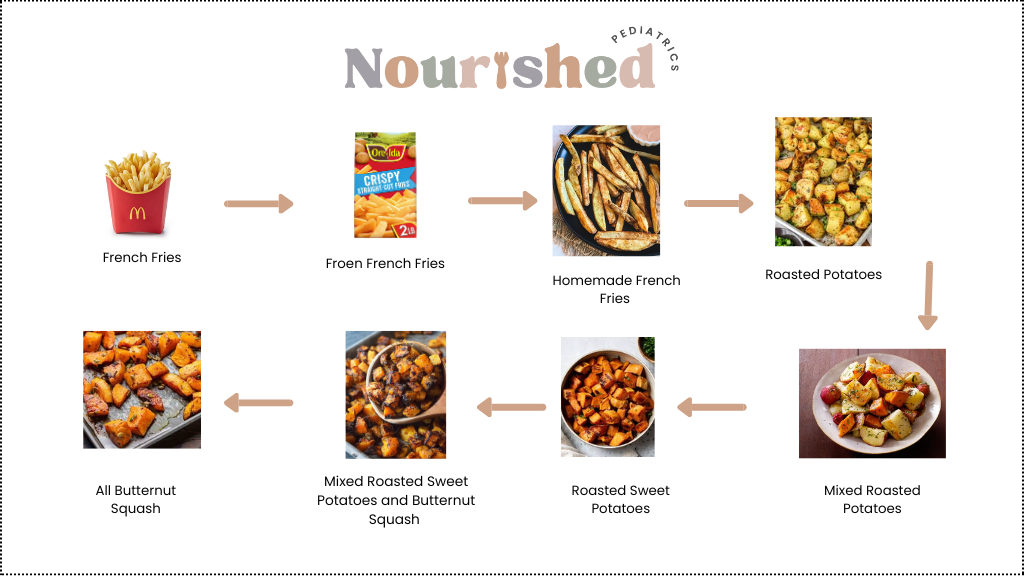
Example 1: From French Fries to Roasted Butternut Squash
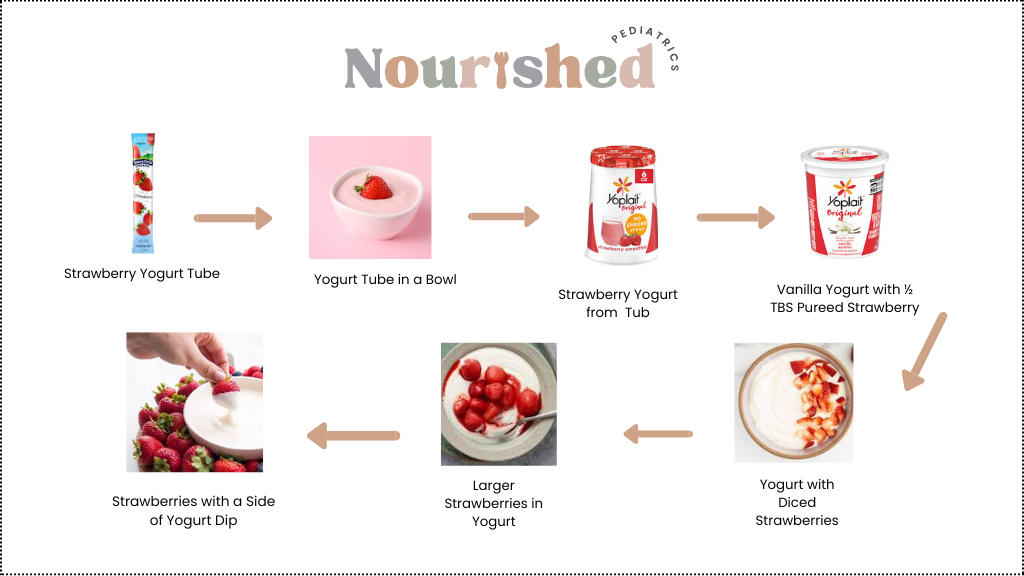
Example 2: From Yogurt Tubes to Fresh Strawberries
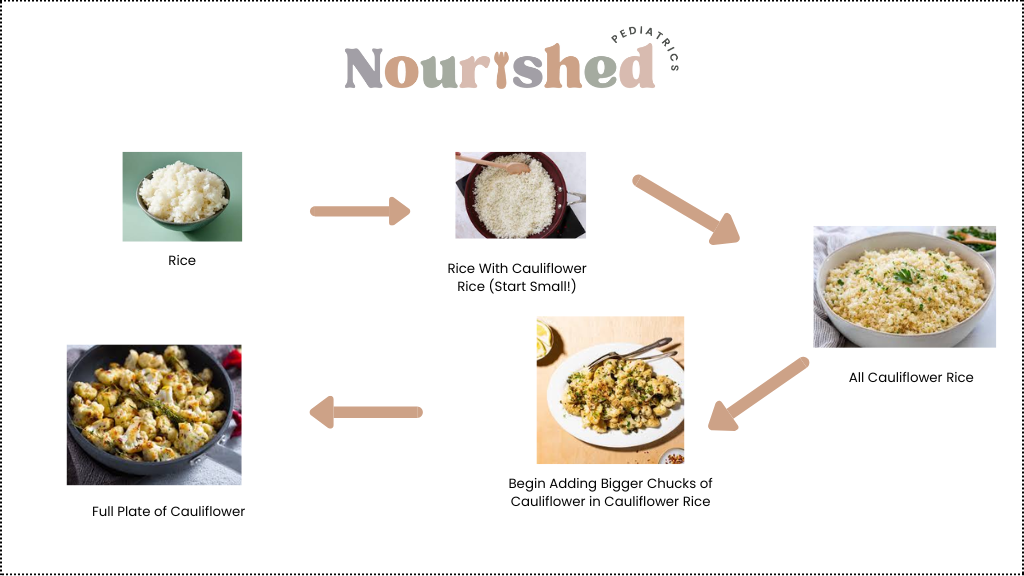
Example 3: Rice to Cauliflower
The Bottom Line
Food chaining is a compassionate, evidence-based way to help your child build trust with new foods. It’s about small, consistent steps — not perfection. When mealtimes are positive and pressure-free, kids are more likely to develop lasting comfort and curiosity with food which is ultimately what we want.
Take a deep breath, keep it playful, and celebrate progress (no matter how small). Over time and with a lot of patience, those little changes will add up to a big win for you and your child’s nutrition!
Download this template to create your own food chaining plan!
